
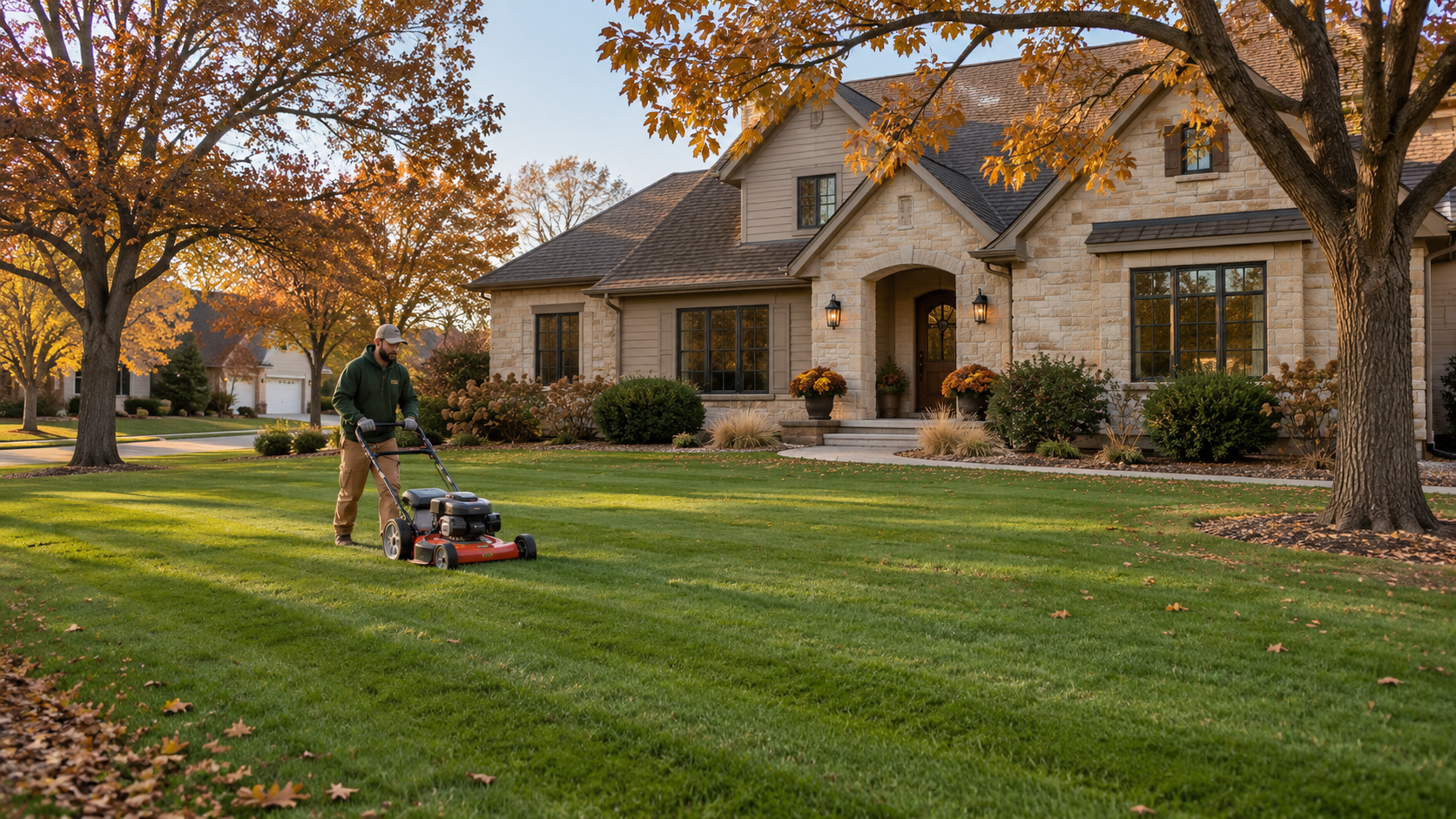
The calendar says fall, the trees are dropping leaves and the mower may already be headed toward storage. But if your lawn is still growing, it may not be finished for the year.
One of the most common late-fall lawn-care questions is when to stop mowing your lawn in Topeka. The answer is not a particular date. Kansas temperatures can change quickly, and cool-season grasses may continue growing well after warm-season lawns begin turning dormant.
The better approach is to watch the lawn itself.
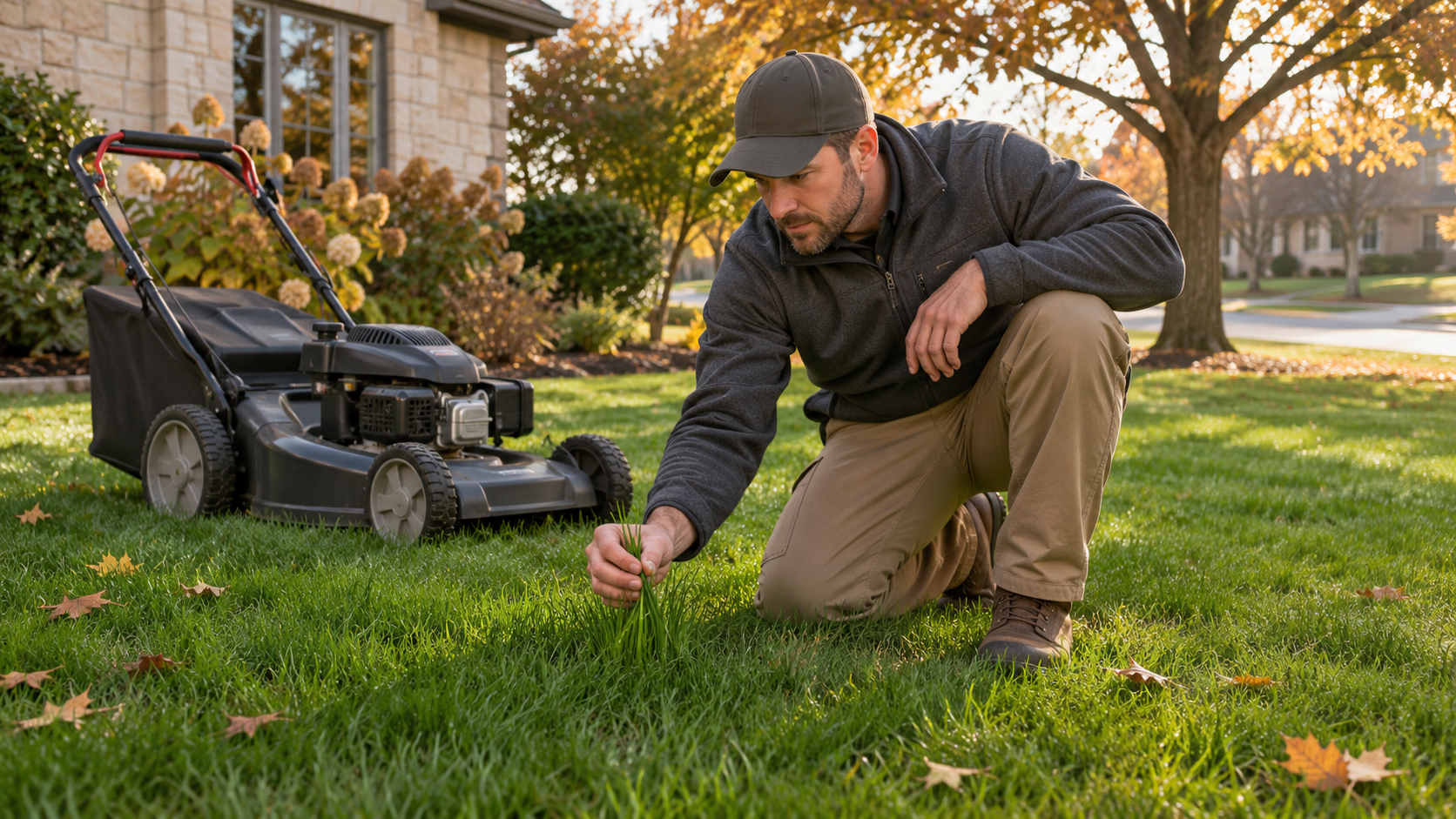
Do Not Stop Mowing Just Because the Calendar Says November
Tall fescue and Kentucky bluegrass are cool-season grasses. They grow most actively during cooler spring and fall weather, so a green lawn may still need attention even after the first cold mornings arrive.
If the grass is visibly growing, becoming uneven or starting to fold over, another mowing may be helpful. Leaving it excessively tall does not give the lawn extra winter protection. Grass that becomes long and matted can hold moisture and create conditions that favor winter lawn problems.
The final mow should happen when the grass has largely stopped growing—not simply when the month changes.
The Final Mow Should Not Scalp the Lawn
Some homeowners assume the lawn should be cut extremely short before winter. That can remove too much healthy leaf tissue and place unnecessary stress on the grass.
Kansas State University recommends maintaining the normal mowing range for the grass growing on the property:
- Tall fescue: approximately 2½ to 3½ inches
- Kentucky bluegrass: approximately 2 to 3 inches
- Buffalograss: approximately 2 to 3 inches
- Bermudagrass: approximately 1 to 2 inches
- Zoysiagrass: approximately 1 to 2 inches
These are general ranges. The right setting depends on the grass variety, its current height and the condition of the lawn.
Follow the One-Third Rule
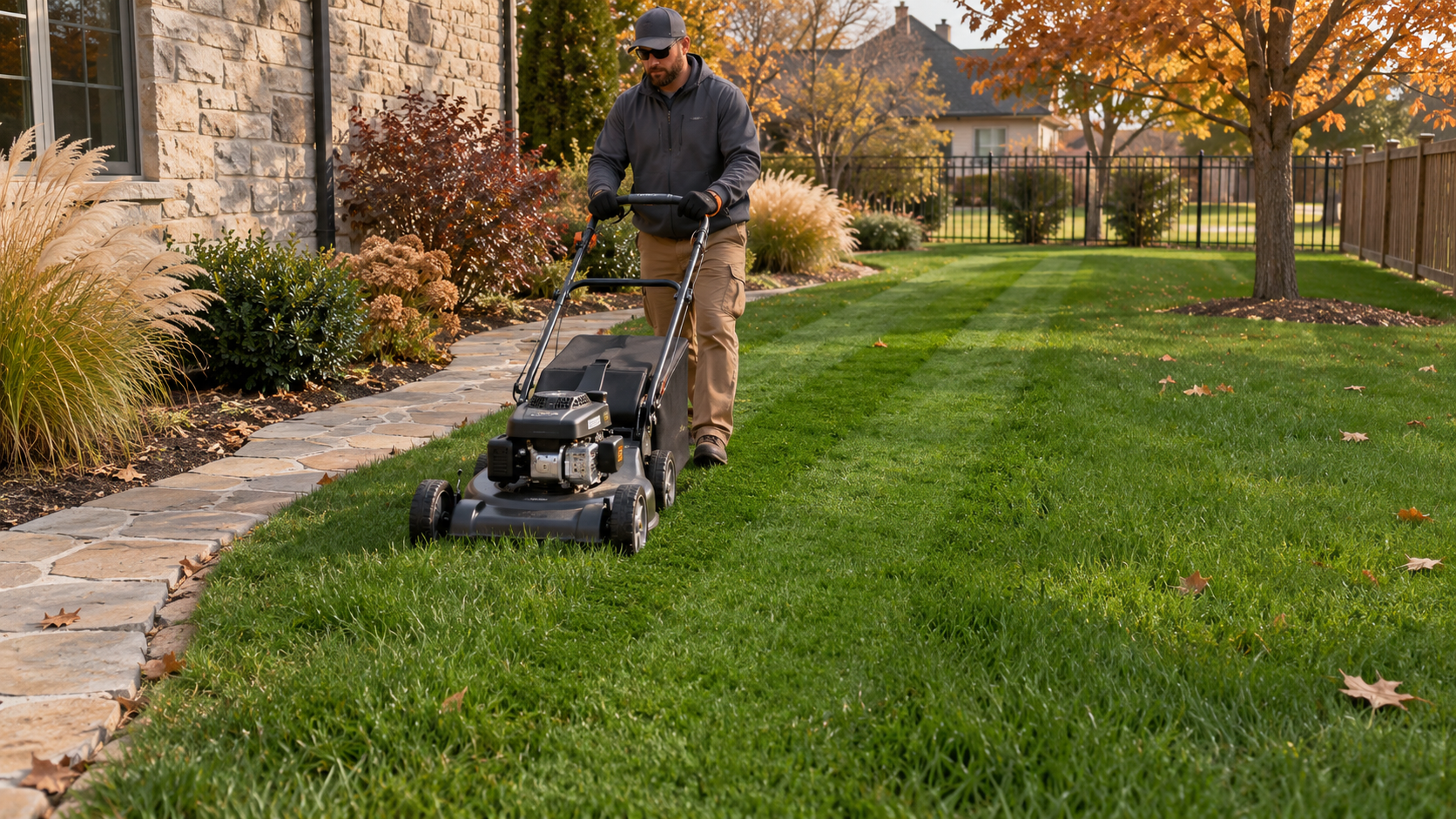
A practical mowing guideline is to avoid removing more than one-third of the grass blade at one time.
For example, if tall fescue is being maintained at three inches, it should ideally be mowed before it grows much higher than 4½ inches. Waiting until the grass becomes very tall and then cutting it dramatically shorter can shock the lawn and leave excessive clippings behind.
If the grass has become overgrown, lowering it gradually is better than trying to correct everything in one pass.
Leaves Can Change the Final-Mow Decision
The grass may not be the only reason the lawn needs another pass.
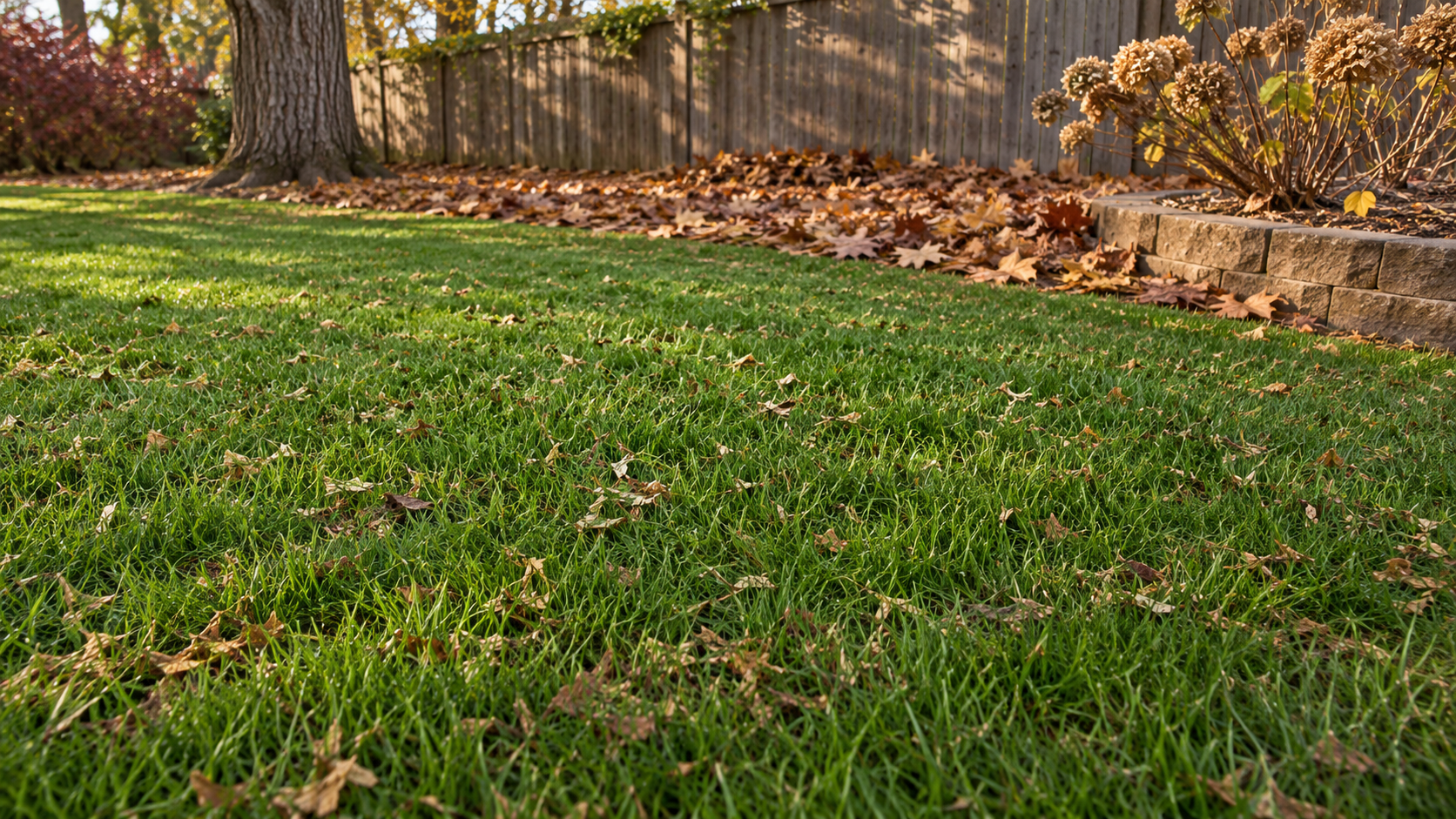
A light scattering of dry leaves can often be broken into smaller pieces during mowing. Those pieces settle between the grass blades and gradually decompose. A thick layer of whole leaves is different. It can block sunlight, trap moisture and prevent the grass underneath from preparing properly for winter.
The amount of leaf cover matters:
- A light, dry scattering may be manageable during mowing.
- Heavy accumulation should be cleared before it mats down.
- Leaves gathered along fences, walkways, patios and landscape beds may require separate cleanup.
- Another round of leaves may fall after the property has already been cleaned once.
Kansas trees do not all drop their leaves at the same time, so a yard can look finished one week and need attention again the next.
How Do You Know It Was Truly the Final Mow?
The season is probably finished when:
- The grass has stopped showing noticeable growth.
- The lawn remains even between checks.
- Most of the property’s leaves have fallen or been managed.
- The grass can be cut while it is reasonably dry.
- The lawn can remain at an appropriate height without being scalped.
There is no need to force one more mowing when the lawn has already gone dormant. But putting the mower away while cool-season grass is still growing can leave the property uneven and harder to finish later.
A Professional Final Mow Is About the Whole Property
A well-finished fall visit is not only about shortening the grass. Mowing, trimming, defining visible edges and managing loose leaves work together to leave the property looking cared for.
B&B can help homeowners address the lawn that is actually in front of them—whether that means another mowing visit, attention around the property’s edges or a final seasonal cleanup.
The goal is a clean, practical finish that carries the yard into winter without unnecessary stress or unfinished buildup.
Areas B&B Serves
B&B Lawns, Ponds & Landscaping proudly serves homeowners throughout:
- 📍 Topeka, KS
- 📍 Meriden, KS
- 📍 Hoyt, KS
- 📍 Holton, KS
- 📍 Topeka and communities north of Topeka
👉 Looking for lawn care near you? Reach out—we may already service your area.