
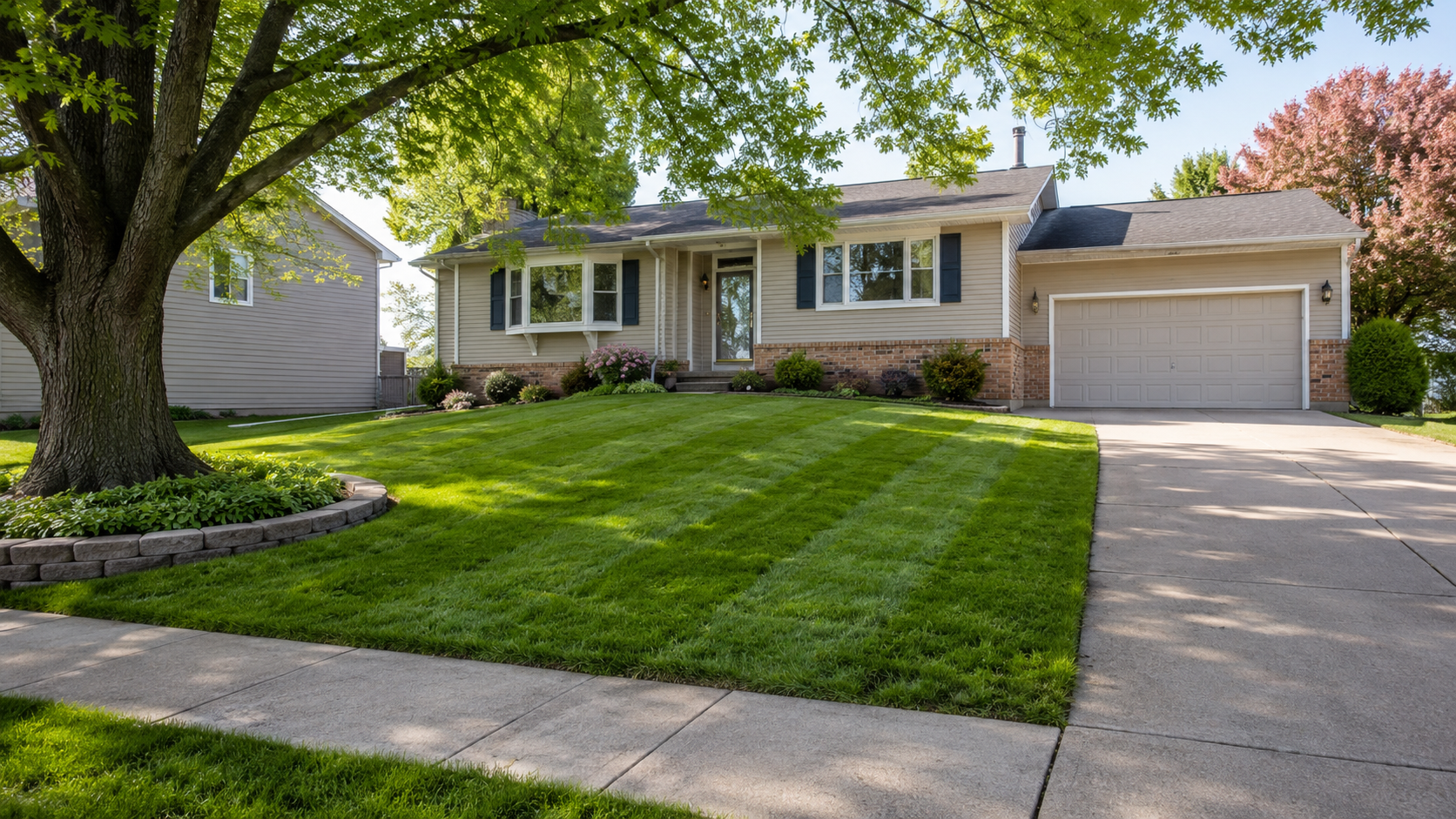
A well-kept lawn changes the way the whole property feels. Clean edges, an even cut, and a dependable routine make the home look cared for before anyone notices the individual details. In Topeka, however, the right schedule changes with rainfall, temperature, grass type, and the season.
Weekly mowing is a strong starting point
During active spring and early-summer growth, many lawns benefit from mowing about once a week. Fast growth after rain may call for a slightly shorter interval, while heat or dry weather may slow growth enough to stretch the schedule. The goal is consistency without removing too much of the grass blade at once.
Mowing height matters as much as frequency
Cutting too short is one of the easiest ways to make a lawn harder to maintain. A little extra height helps shade the soil, support deeper roots, and reduce the opportunity for weeds to take over. The ideal height depends on the grass, but the mower should be adjusted with the season and current conditions in mind.
Signs the lawn may be getting cut too short
- The grass looks pale or scalped immediately after mowing.
- High spots turn brown while lower areas remain green.
- Weeds begin filling thin, exposed areas.
- The lawn dries quickly during hot weather.
A finished cut includes trimming and edging
Mowing the open areas is only part of routine lawn care. Trimming around fences, trees, beds, and structures prevents a shaggy border. Edging along walks and driveways gives the property a clean frame. Blowing clippings off hard surfaces is the final step that makes the work look complete.
Adjust the routine through the Kansas seasons
Spring usually brings quicker growth and more frequent mowing. Summer may require a higher cut and a flexible schedule during heat or drought. Early fall often brings another stretch of active growth, followed by slower mowing as temperatures drop. Leaves should be mulched or removed before thick layers smother the grass.
When routine lawn maintenance is worth it
Weekly service can make sense when weekends are already full, the property has many edges and obstacles, or consistency is difficult to maintain. It is also useful for homeowners who want the lawn handled along with seasonal cleanup or nearby landscape beds. A quick property walk-through helps determine the right schedule and level of care.