
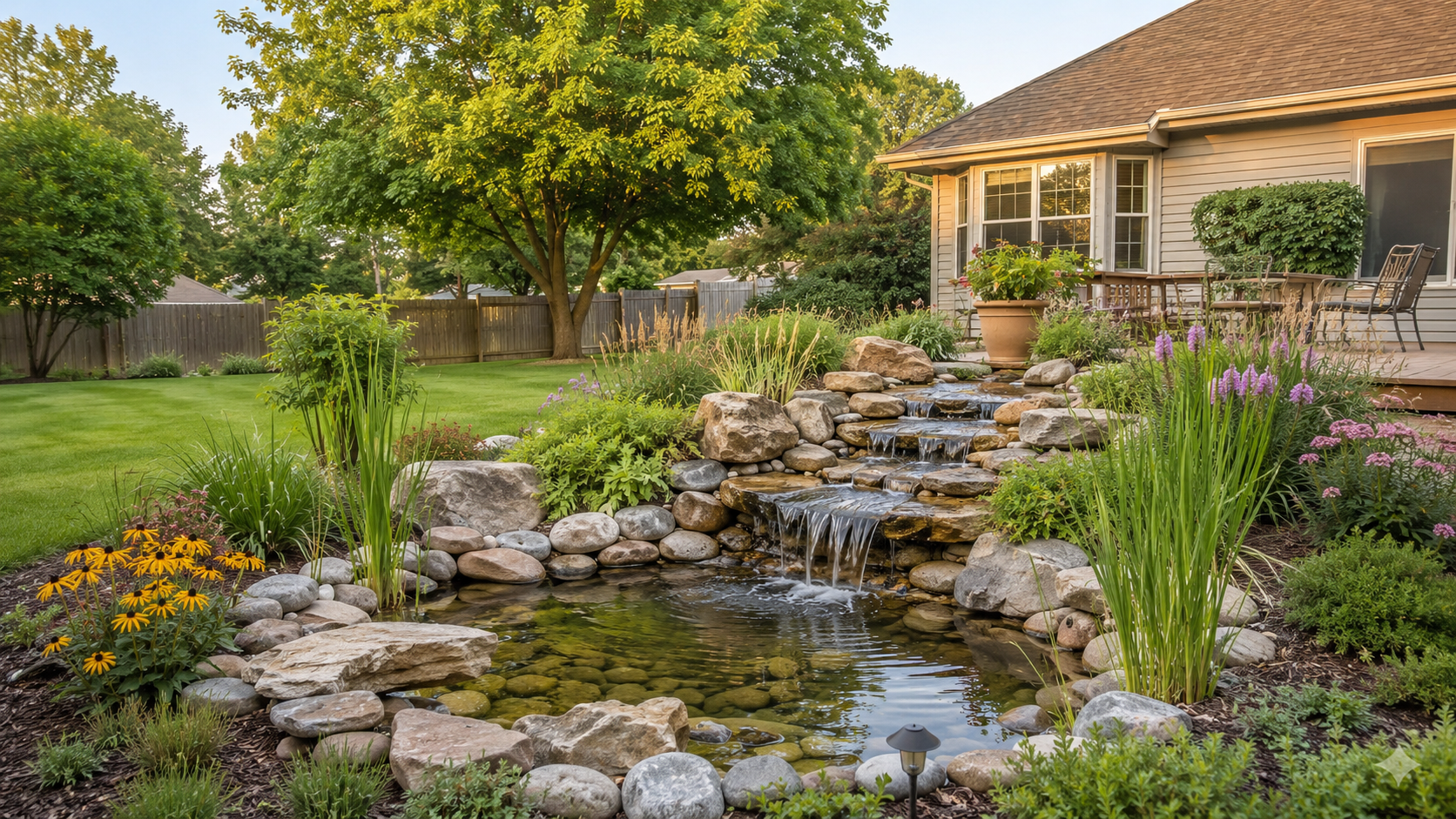
A backyard pond can become the place where the yard finally feels settled. Water softens hard edges, reflects the sky, and adds sound that helps screen ordinary neighborhood noise. A smaller waterfall or pondless feature can create much of the same effect with a different level of upkeep.
Start with the experience you want
Before choosing stone, plants, or a pump, decide what the feature should add to daily life. Some homeowners want a quiet view from the patio. Others picture fish, aquatic plants, or the sound of moving water near an outdoor sitting area. That purpose should guide the size, placement, and design.
Common directions to consider
- Garden pond: still and moving water with plants and a natural shoreline.
- Fish pond: planned depth, filtration, circulation, and protection appropriate for fish.
- Pondless waterfall: moving water that disappears into a hidden reservoir.
- Small fountain feature: a compact focal point for a patio, entry, or planting bed.
Placement can make or break the result
A water feature should feel connected to the home and outdoor living areas. Consider the view from inside, access to electricity, existing drainage, mature tree roots, falling leaves, and how people move through the yard. A feature hidden in an unused corner may receive less enjoyment and less routine attention.
Choose a scale that fits the property
Bigger is not automatically better. A compact feature near a patio can have more impact than a large pond at the back fence. The right scale leaves enough room for access, planting, maintenance, and safe movement around the feature while keeping the overall yard balanced.
Plan for maintenance before installation
Every water feature needs some care. Pumps and filters require attention, leaves and debris need removal, and plants may need seasonal trimming. Fish add another layer of responsibility. A good plan matches the feature to the amount of maintenance the homeowner realistically wants to handle.
Improving an existing pond may be enough
An older pond does not always need to be replaced. Reworking stone, improving circulation, repairing an edge, refreshing plantings, or making the surrounding landscape feel more intentional can transform the entire view. An on-site conversation is the best way to decide whether repair, improvement, or a new installation makes sense.